The issue description is more than a plain text field: the editor supports formatting, lists, tables, links, images, and more. This article shows you what's possible.
Basics
Use the issue description to document your issue in detail — for example, with task lists that show a measure's progress as items get checked off.
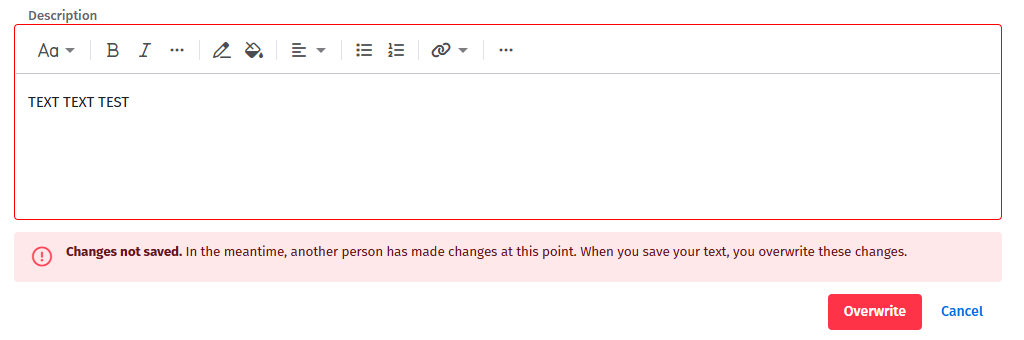
Paragraph formats
The Aa menu gives you these paragraph formats:
- Heading 1, 2, 3 – to structure the description
- Subtitle – lowers the text, e.g. for mathematical expressions or text indices
- Normal text – the standard paragraph text without further formatting
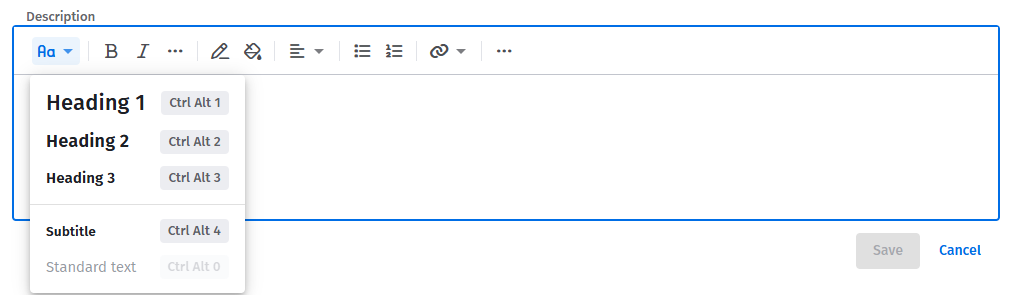
More character formats
In addition to bold and italic, the editor supports:
- Underline and strikethrough
- Code – for program code or other information displayed in its own style
- Subscript and superscript – e.g. for mathematical expressions
- Clear formatting – removes all formatting, including formatting carried over when copying from other sources such as Word or web pages
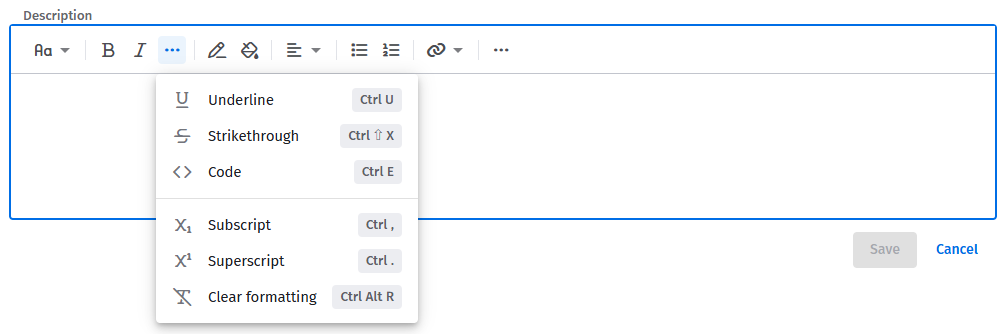
Colors
Use the color picker to set both the text color and the text background, to highlight important content or critical points.
Alignment
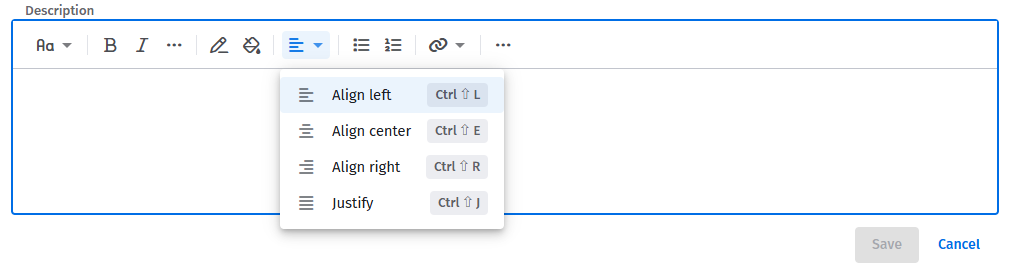
Text can be aligned left, centered, right, or as justified.
Bullet and numbered lists
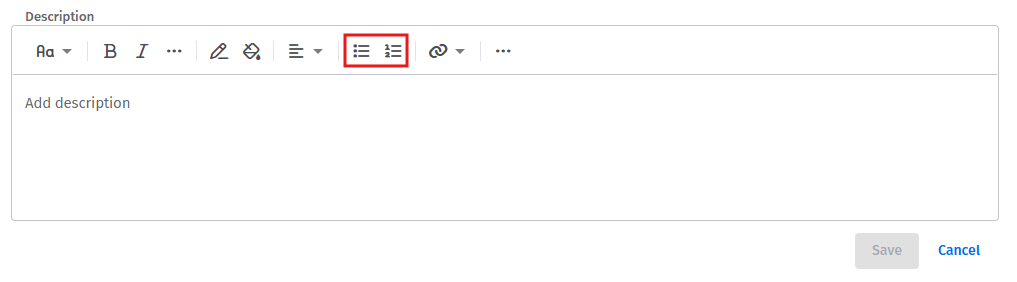
Add bullet or numbered lists using the corresponding functions. Select existing text to convert it into a list afterwards.
Links and references
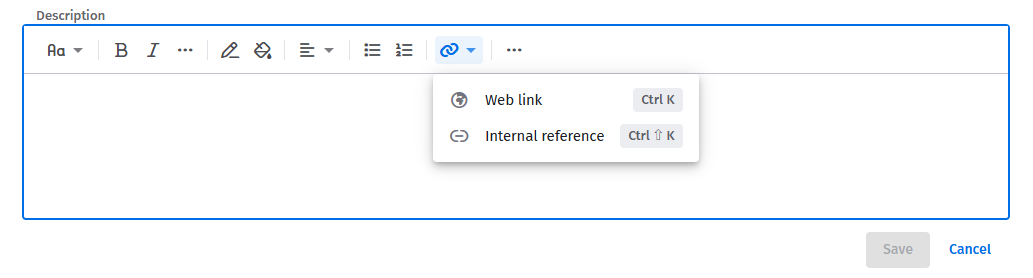
Use the link icon to insert either a web link to an external website or a reference to other Q.wiki content. References can be searched simply by the title of the desired element.
Insert images
You can insert images into both the issue description and comments in two ways:
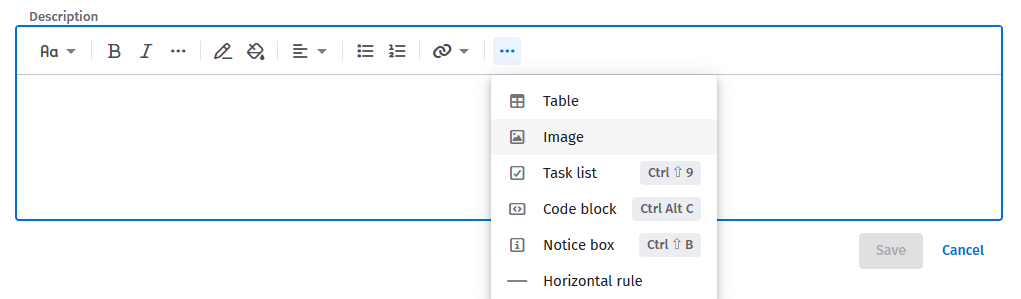
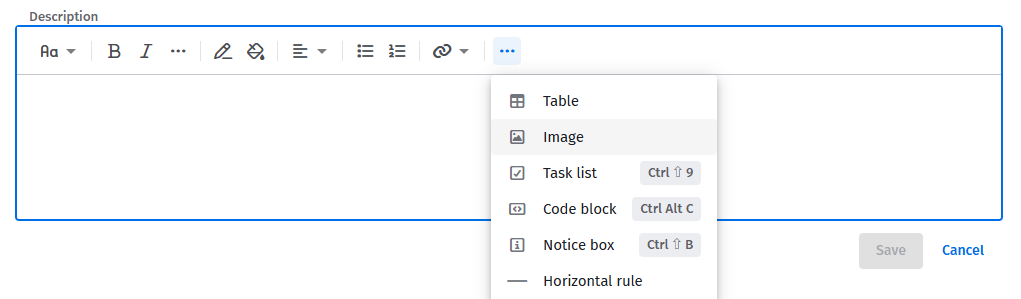
- Via the three-dot menu and selecting Image, to choose a file from your computer
- By drag and drop directly into the description
Inserted images also appear in the Attached files section, where you can remove them using the trash icon.
More options
The three-dot menu also gives you access to the following elements:
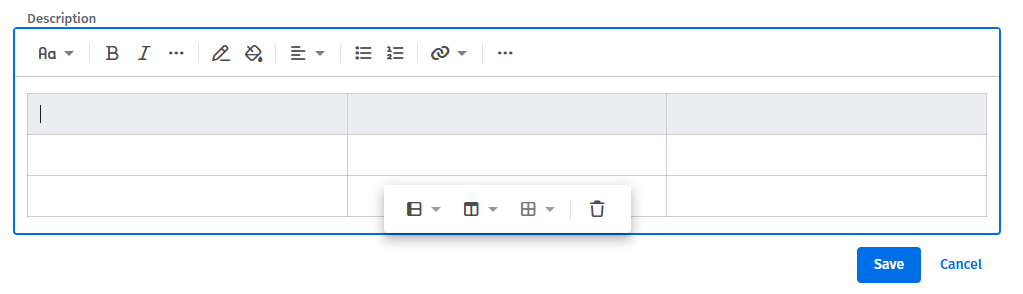
Tables
Inserts a table with three columns to start. Use the table menu to insert or delete rows and columns, and to merge, split, or highlight cells.
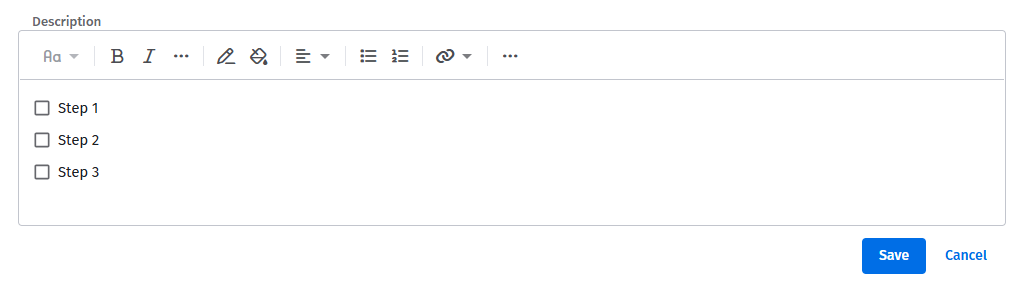
Task list
Shows the progress of individual tasks. Items can be checked off one by one.
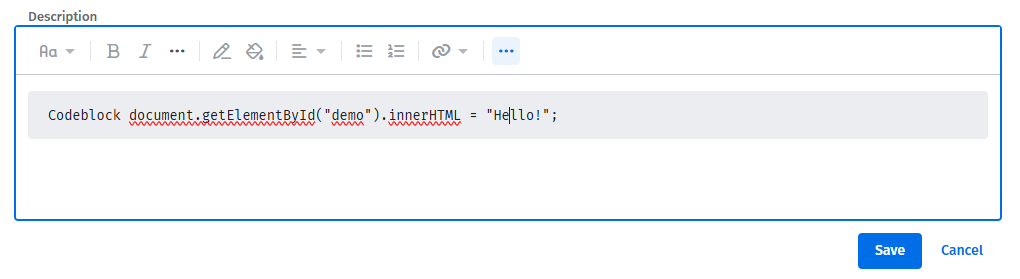
Code block
Displays program code unformatted and easy to copy.
Callout
Highlights content with color. Once your cursor is placed in the callout, you can change its color or delete it entirely.
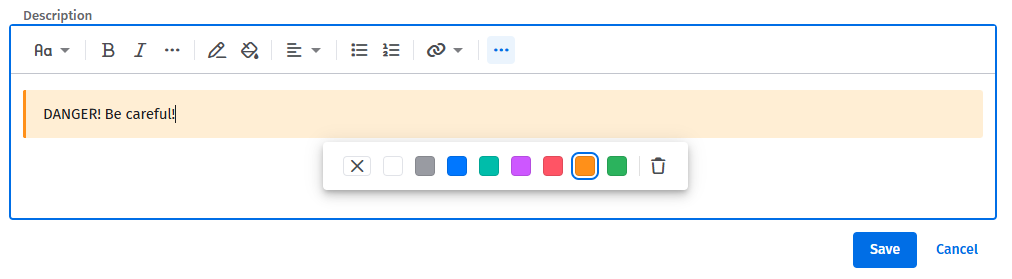
Horizontal rule
Visually separates content from one another.
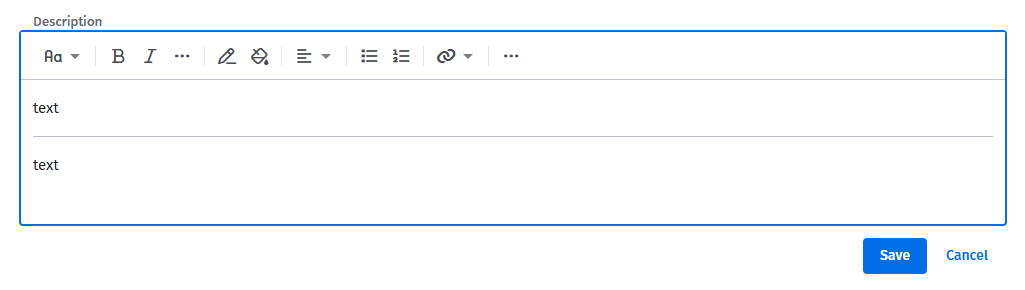
Keyboard shortcuts
While editing the issue description or a comment, you can use the following keyboard shortcuts:
| Effect | Windows | Mac |
|---|---|---|
| Heading 1 | Ctrl + Alt + 1 | ⌘ + ⌥ + 1 |
| Heading 2 | Ctrl + Alt + 2 | ⌘ + ⌥ + 2 |
| Heading 3 | Ctrl + Alt + 3 | ⌘ + ⌥ + 3 |
| Subtitle | Ctrl + Alt + 4 | ⌘ + ⌥ + 4 |
| Normal text | Ctrl + Alt + 0 | ⌘ + ⌥ + 0 |
| Bold | Ctrl + B | ⌘ + B |
| Italic | Ctrl + I | ⌘ + I |
| Underline | Ctrl + U | ⌘ + U |
| Strikethrough | Ctrl + Shift + X | ⌘ + ⇧ + X |
| Code | Ctrl + E | ⌘ + B |
| Subscript | Ctrl + , | ⌘ + , |
| Superscript | Ctrl + . | ⌘ + . |
| Clear formatting | Ctrl + Alt + R | ⌘ + ⌥ + R |
| Align left | Ctrl + Shift + L | ⌘ + ⇧ + L |
| Center | Ctrl + Shift + E | ⌘ + ⇧ + E |
| Align right | Ctrl + Shift + R | ⌘ + ⇧ + R |
| Justify | Ctrl + Shift + J | ⌘ + ⇧ + J |
| Bullet list | Ctrl + Shift + 8 | ⌘ + ⇧ + 8 |
| Numbered list | Ctrl + Shift + 7 | ⌘ + ⇧ + 7 |
| Web link | Ctrl + K | ⌘ + K |
| Mention | @ | @ |
| Task list | Ctrl + Shift + 9 | ⌘ + ⇧ + 9 |
| Code block | Ctrl + Alt + C | ⌘ + ⌥ + C |
| Callout | Ctrl + Shift + B | ⌘ + ⇧ + B |
Related articles
Was this article helpful?
That’s Great!
Thank you for your feedback
Sorry! We couldn't be helpful
Thank you for your feedback
Feedback sent
We appreciate your effort and will try to fix the article