Every risk can be assigned a risk type. The risk type is used to categorize risks by origin or nature and enables more targeted evaluation and filtering in the views.
Default risk types
By default, the following risk types are available:
| Risk type | Description |
|---|---|
| Operational risk | Risks arising from internal processes, systems, or employee actions. |
| Financial risk | Risks with a direct impact on the company's financial position. |
| IT and cyber risk | Risks arising from IT systems, data security, or cyberattacks. |
| Legal & compliance risk | Risks arising from violations of laws, regulations, or contractual obligations. |
| Reputational risk | Risks with a negative impact on the company's reputation. |
Good to know: The risk type is only available for the Risk issue type, not for opportunities.
Customize risk types
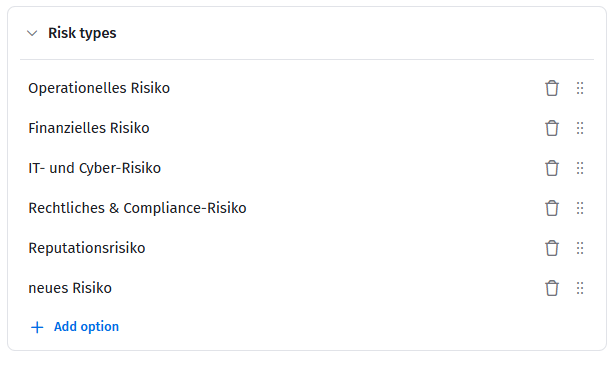
The list of risk types isn't fixed – you can customize it individually in the team settings. You can rename existing types, add your own risk types, or change the order in which they're displayed.
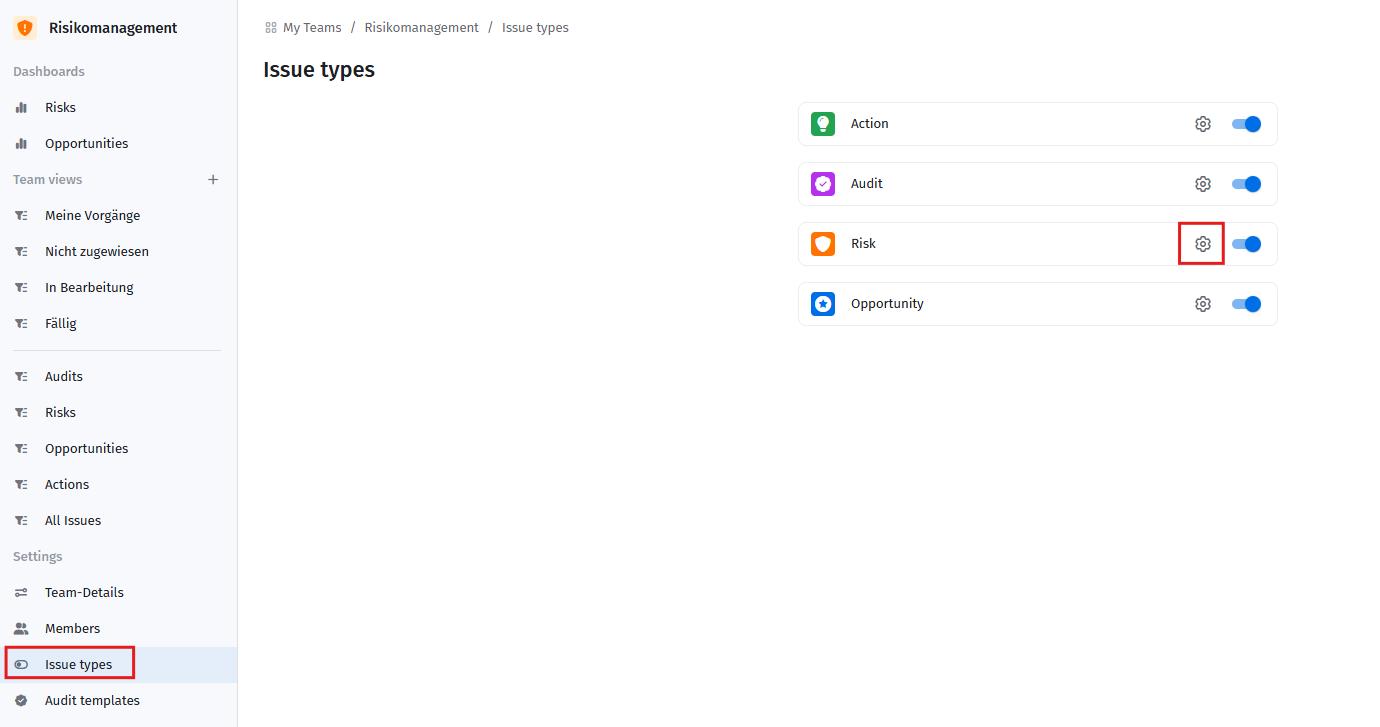
- Open the issue types in your team.
- Click the gear icon next to the Riskissue type to configure it.
- Adjust the risk typesas needed:
- Click Add option to add a new risk type.
- Click an existing risk type to rename it.
- Drag a risk type by the six-dot handle to change its order.
- Click the trash icon to remove a risk type.
Related articles
Was this article helpful?
That’s Great!
Thank you for your feedback
Sorry! We couldn't be helpful
Thank you for your feedback
Feedback sent
We appreciate your effort and will try to fix the article