The status of an audit shows you at a glance which phase it is in and what you can still edit. The further an audit progresses, the more becomes write-protected to ensure traceability.
The nine statuses at a glance
The audit has just been created. No responsibilities or deadlines have been defined yet.
Responsibilities and deadlines have been set. The audit is ready for preparation.
The team is actively preparing the audit, for example by reviewing documents or coordinating with those involved.
The auditor is actively working through the question catalogue and recording findings and ratings.
Preparation or execution has been temporarily interrupted, for example due to external dependencies or missing information.
The audit is complete. The team is documenting results and initiating measures. The question catalogue is already locked at this point.
The audit was completed successfully and closed. No further edits are possible.
The audit was closed without reaching its goal. No further edits are possible.
The audit was cancelled and not carried out. No further edits are possible.
What you can still edit depending on the status
The further an audit progresses, the more becomes write-protected.
| Status category | What is locked? |
|---|---|
| Open Open, Planned | Nothing, you can edit everything |
| In progress Preparation, Execution, Paused | Delete question catalogue is disabled |
| Follow-up | Delete question catalogue and Edit question catalogue are locked. Findings, conformities, and justifications can no longer be edited. |
| Successful Closed Not successful, Discarded | Everything from Follow-up. Additionally, attachments and links on questions can neither be removed nor created. |
Changing the status
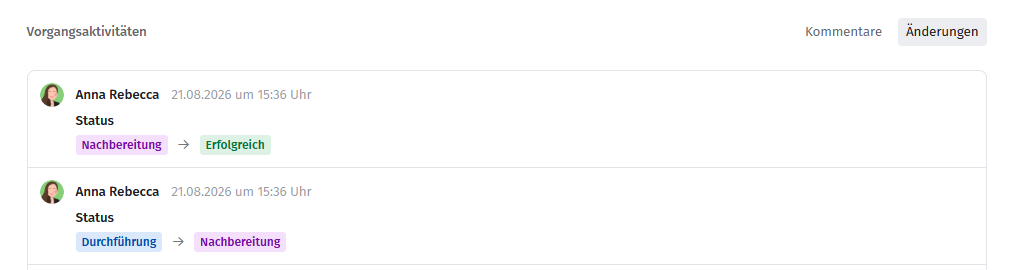
You can change the status at any time, even if the question catalogue is currently locked. You need the appropriate permissions to do so. All status changes are traceable via the change history.
Related articles
ALTER ENTWURF:
An audit's status shows which phase it's currently in. This article explains the individual statuses, how they're grouped into status categories, and which editing restrictions result from them.
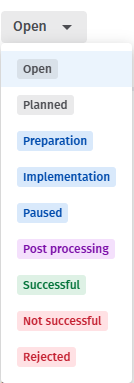
Status overview
| Status | Meaning |
|---|---|
| Open | Newly created audit |
| Planned | Responsibilities and dates have been defined |
| Preparation | Editors are preparing the audit |
| Implementation | The auditor is conducting the audit |
| Post-Processing | The audit is complete, editors are handling follow-up (e.g. creating measures) |
| Paused | Preparation or execution was interrupted, e.g. due to external dependencies |
| Successful | The audit was closed successfully |
| Not successful | The audit was closed unsuccessfully |
| Rejected | The audit was not carried out |
Status categories and locking behavior
Depending on its status, an audit becomes write-protected. The individual statuses are grouped into status categories. Different changes are no longer possible depending on the category:
| Status category | Effect |
|---|---|
| Open (Open, Planned) | – |
| In progress (Preparation, Implementation, Paused) | "Delete catalog of criteria" is disabled |
| Post-Processing | "Delete catalog of criteria" is disabled; "Edit catalog of criteria" is locked; findings, conformities, and justifications can no longer be edited |
| Successful and Closed (Not successful, rejected) | "Delete catalog of criteria" is disabled; "Edit catalog of criteria" is locked; findings, conformities, and justifications can no longer be edited; attachments and links on criteria can neither be removed nor newly created |
Change the status
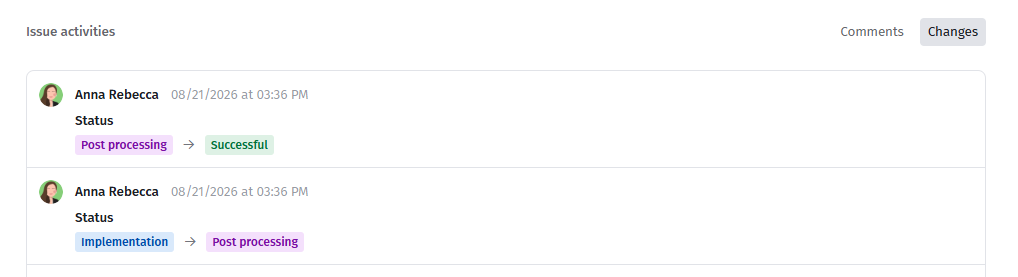
With the right permissions, you can always change the status itself — even while the catalog of criteria is locked. Status changes made are traceable via the change history.
Related articles
Was this article helpful?
That’s Great!
Thank you for your feedback
Sorry! We couldn't be helpful
Thank you for your feedback
Feedback sent
We appreciate your effort and will try to fix the article